John Dalton
Doctor SleepJohn Dalton, known to Dan Torrance as Doctor John, is a pediatrician and a fellow member of Dan’s Alcoholics Anonymous community. He moves between two kinds of care: the clinical attention he gives children and the steady, practical help he offers Dan and Abra Stone. When Abra’s abilities put her in danger, Dalton’s loyalty becomes physical as well as professional; his role is that of a trusted ally who helps turn concern into action.
Identity and Recovery Community
Dalton is the Stones’ pediatrician, but Dan first knows him through their shared recovery life. At a Thursday-night Big Book meeting in North Conway, Dalton is the person who makes the coffee. Dan initially recognizes him as a fellow rather than by his last name, a detail that establishes the familiarity of their meetings and the informality of their connection. Dalton is also called Doctor John and DJ.
The meetings offer a setting in which Dalton’s ordinary service matters. After one reading from The Big Book of Alcoholics Anonymous, he turns the coffee urn upside down in the dish drainer, dries his hands, and prepares to leave, expecting to see Dan the following week. The reading, called Gutter Bravado, follows the familiar recovery-story pattern of drinking, escalating harm, and eventual reform. Dan reflects that the book’s stories end happily; Dalton’s modest work around the meeting belongs to the practical community that makes recovery possible beyond the page.
Dalton’s presence at the meetings also connects him to the principles Dan has learned through sobriety. When Dan later explains that he has been waiting for someone to ask how he helps, he identifies working the Twelfth Step as the answer. The conversation makes Dalton a recipient of Dan’s experience, but it also suggests a reciprocal fellowship: Dalton is not simply a doctor whom Dan consults, but a person with whom he shares the ordinary obligations of recovery.
Pediatrician and Investigator
Dalton’s medical role brings him close to Abra before he fully understands the danger surrounding her. He arrives while on his way to work, lifts her onto his shoulder, and asks whether the family has heard what has happened. His manner joins practical urgency to familiar care: he is responding as a physician and as someone who knows Dan well enough to recognize the importance of the situation.
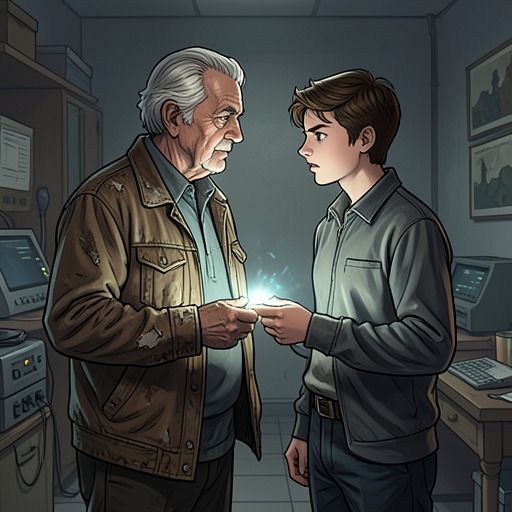
When Abra displays an extraordinary ability, Dalton asks her directly whether she caused it, seeking to understand how much she herself knows. Rather than dismissing the evidence, he undertakes a concrete investigation. He hires a computer-savvy nephew at his own expense to look for documented cases like Abra’s, restricting the search to the previous thirty years. The search turns up more than nine hundred cases. Dalton does not present that number as an explanation of Abra; it establishes that he has tried to place her experience in a wider record and to gather information instead of leaving the family to face the question alone.
His concern extends beyond Abra’s unusual abilities to the ordinary vulnerabilities of children in his care. Dan reminds him of a child he had worried about in connection with Goocher’s. The exchange gives their friendship a professional dimension: Dan knows Dalton as a pediatrician who carries particular cases with him, while Dalton can hear Dan’s reminder as both a friend and a fellow caregiver.
Fellowship and Twelfth-Step Help
Dalton’s friendship with Dan is reinforced by small acts of trust and by the obligations of recovery. When a seven-hundred-dollar watch goes missing, Dan fears that Dalton might damage his marriage and career over the loss, as people with alcohol problems can do over much less. At the following Thursday’s We Study Sobriety meeting, Dan finds Dalton present, with the watch also recovered. The episode places the watch’s return beside the possibility of a much larger personal loss, showing why Dan’s worry was not merely about the object.
Dalton asks Dan how he manages to help in such situations, and Dan points to Twelfth Step work. The answer gives their relationship a clear shape: Dan’s own recovery has become a form of service, and Dalton is someone to whom that service can be offered. Their friendship also works in the other direction. When Dan needs help responding to a crisis, he calls Dalton; their fellowship has become a dependable channel for action, not only conversation at meetings.
Ally in the Crisis Around Abra
As Abra’s family confronts the threat against her, Dalton becomes part of the group helping to protect her. David Stone questions whether he is suited to bodyguard duty, emphasizing that Abra is his daughter. Dalton nonetheless remains involved. During an attack, he runs from the woods, drives the attacker away from David, and uses Billy Freeman’s deer rifle to stop her from continuing the assault. His intervention is decisive and immediate, converting his presence at the scene into direct protection.
Afterward, Dalton helps assess why Abra has been taken alive. He reasons that a dead captive would be of no use to the person who seized her, whereas a living one can be held hostage. He also recognizes that the attackers want her for a purpose, though he does not finish explaining it in the cited exchange. The distinction matters: Dalton is not only a source of physical assistance but a participant in interpreting the danger and its stakes.
He continues to support the group as events unfold. Dan and Dalton travel together to Massachusetts General Hospital, where Dan needs access to Concetta Reynolds. Dalton is presented as the family doctor, an introduction that helps them get through the hospital’s formalities. Later, when Lucy Stone sees Abra in a seizure-like state and tries to rush to her, Dalton holds her back while David remains transfixed. His action keeps Lucy from disrupting the moment, even as her fear and desire to reach her daughter are plain.
Support, Limits, and Significance
Dalton’s assistance does not mean he claims to take Dan’s place. On the back stoop where Abra had once lain in an altered state, he tells Dan that he would offer moral support but believes Dan has to do what comes next alone. The exchange marks both his closeness and his limit: he can accompany Dan to the threshold, but he understands that this particular task belongs to Dan.
Dalton is also present in the quieter, prolonged work of care. At a nurses’ station, he repeatedly asks whether a patient is still alive, returning to the same question dozens of times. The phrasing treats waiting as an almost routine measure of time, but the repetition reveals the persistence required of someone who continues to attend a dying person. Across the novel, Dalton’s medical identity is therefore not confined to diagnosis or intervention. He shows up, asks, investigates, accompanies, and waits.
His significance lies in the way these roles reinforce one another. Recovery meetings make him Dan’s friend; medicine brings him into the Stones’ family crisis; and that friendship makes his practical help available when danger exceeds the ordinary reach of a doctor’s work. Dalton does not possess Dan’s abilities or Abra’s extraordinary power. His contribution is more grounded: he gathers evidence, cares for the people in front of him, and acts when the people he trusts are at risk.